


I booked the flight while the conflict was still live. The Strait of Hormuz was closed, missiles were still moving across the Gulf, and a week before I flew, drones struck Kuwait International Airport, killing one passenger and wounding more than sixty.
Kuwait and US Central Command blamed Iran. Tehran denied it. By the time I reached my gate in Kuala Lumpur, the airport screens were carrying a different headline. Washington and Tehran had signed a memorandum of understanding. A fragile ceasefire was holding. The war was not finished, but the shooting had mostly stopped.
I sat on the plane with a strange thought. I might be one of a very small group of professionals flying into Dubai this soon after the guns went quiet. Six and a half hours later, I understood something I have been turning over ever since. The Dubai I landed in was not the Dubai I had been watching from Malaysia, New Zealand and Australia.
That gap is the entire point of this piece.
The first thing that hit me, before anything else, was the heat. Not the Kuala Lumpur humidity I’d grown used to, but a dry, flat 37 degrees with not a cloud in the sky. The second was the efficiency. I was off the plane, through immigration, had collected my bag and was out of the terminal in under forty minutes, in a clean, professional taxi with the air conditioning turned down to something close to Arctic.
The third thing took longer to notice, because it was an absence. The motorways, the lanes, the vast pedestrian boulevards, none of them were at capacity. Dubai is built at a scale that assumes crowds, and the crowds were thinner than the architecture expected. Some of that is seasonal. The city empties out as summer climbs toward the mid-40s and, on its worst days, close to 50. But some of it was the war.
What the government chose to do with that moment was the first lesson. Along the motorway, hundred-metre billboards read “The United Arab Emirates welcomes everyone.” It was tourism messaging, but it was also something steadier, a state telling its residents in large letters that they were being looked after. I was yet to see the evidence behind the slogan, but I knew to keep an eye out.
Underneath it sat a harder edge. Several people told me that during the conflict, spreading misinformation or AI-generated deepfakes could earn you deportation or a jail term. Whether or not you find that comfortable, the effect was specific.
If information did not come from an official channel, you treated it as suspect. The fact-versus-assumption problem that defines most crises, the fog where rumour travels faster than truth, had been deliberately compressed. People knew where their information came from, and they trusted it, because what they were told kept matching what they saw.
That trust extended to the sky. When the interceptions were happening, an emergency alert went out to every phone in the country, telling anyone near a strike to seek shelter.
Residents described three or four interceptors going up for every incoming Iranian drone or missile, until the spectacle became almost routine. More than one person described it, with the dark humour that long crises breed, as a fireworks show. That is what normalisation under fire looks like, and it is not bravado. It is what happens when people believe the system over their heads is working.
Dubai was hit. I want to be clear about that, because it is where coverage and reality both have a claim. In the opening days of the war, debris from an intercepted Iranian drone sparked a fire at the entrance of the Fairmont The Palm, the five-star hotel on the same island where I would later stay. Four people were injured.
The international airport was struck and briefly evacuated. A tower in the Marina was hit by falling debris. Across the Emirates, the authorities later counted more than a dozen dead and over two hundred injured. None of that is invention, and none of it should be waved away.
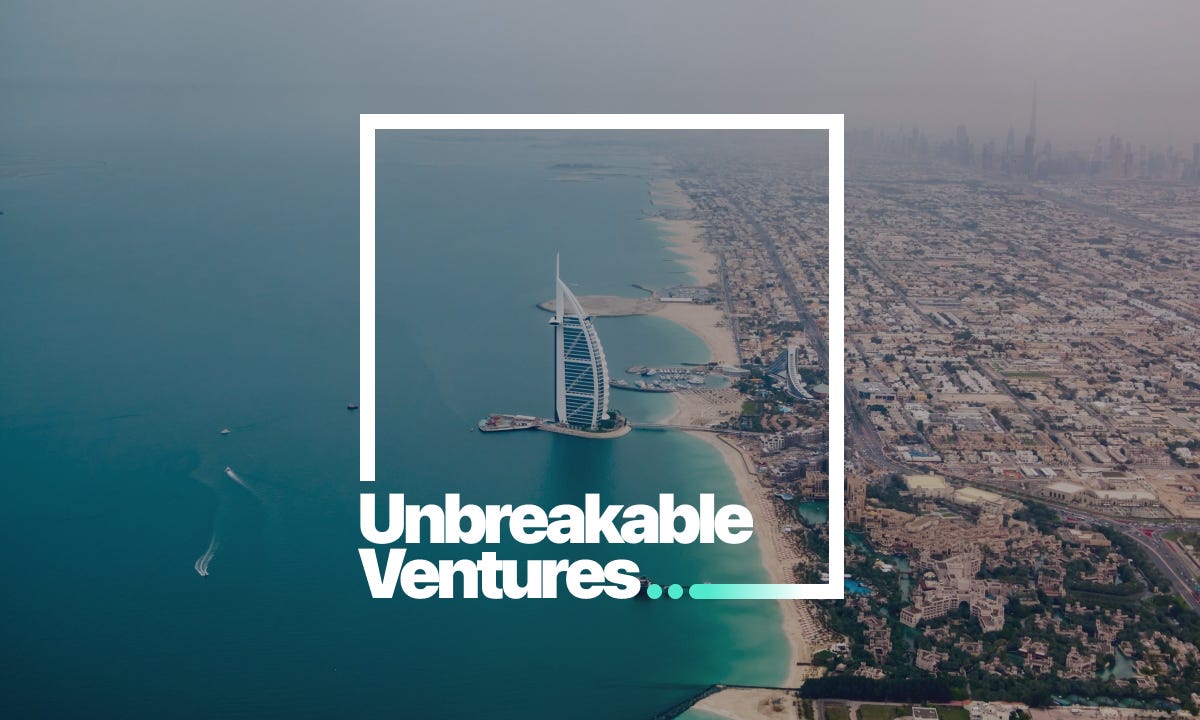
And yet, by the time I arrived, the damage was contained and the city had moved on. Chatter still circulated about which marquee hotels had supposedly been struck. I walked up to the Burj Al Arab, the sail-shaped landmark on the waterfront, and found nothing. No damage, no cordon, no scaffolding. Over lunch, one businessman gestured at the skyline and said, with a smirk,
“look, they are all still standing.”
The one place the war reached me directly was my phone. GPS was unreliable for most of the trip, and taxis navigating by map were close to useless at times. I was told a data centre might have been affected by unidentified falling objects. Whatever the cause, it was the first time I had felt a live conflict reach into the device in my hand, and it was both unsettling and clarifying.
I carried one question through the entire trip. What is business confidence here, right now?
I ask because I track this figure obsessively at home. In New Zealand it is published quarterly, sometimes monthly, and it tends to predict whether a small business like mine gets paid. What I have learned is that the headline number rarely matches how people feel on the ground.
So, I asked everyone. Entrepreneurs, advisors, waiters, friends, family. The answer was unanimous, and it surprised me.
Confidence was high.
That is the most important learning I brought home. Sitting overseas, watching the bombardment, I assumed people would want to leave, and many did. But the ones who stayed were not bracing. They were positioning. Trade continued. Deals continued.
In the middle of a war, the city inaugurated tunneling on Etihad Rail and their new stations were confirmed. You do not commit billions to rail you will not ride for years unless you are confident there will be a city to ride it in.
More than the hardware, it was the handling. People had been told things they could verify, and that built the kind of trust that lets a society keep functioning while it is under fire.
The clearest picture of that came on an ordinary evening out. My colleague Umaima, our Resilience Advisor at Fixinc based in Dubai, took me to the Australian Business Council Dubai quiz night, held in a make-shift English-style pub. It was packed. Business owners had brought their families. The mood was loud, warm and entirely unbothered. If a room full of expatriates and their kids laughing over a trivia night a few weeks after a missile exchange does not signal a return to normal, nothing does.
Not everything was strong. The hotels that survived COVID are still paying down the debt it cost them, and some have closed in the past year because they could not. My resort, spectacular and near empty, was running weekend stay-cation deals straight out of the 2020 playbook.
The government had already moved on exactly this pressure. At the end of March, it approved a one-billion-dirham support package, letting hotels, hotel apartments and holiday homes defer the full sales fees on rooms and food, along with the Tourism Dirham, for three months from the first of April.
Read one way, that is a city shielding its most exposed sector. Read another, and you get the sharper point Umaima brought back from a later ORF session where the package was picked apart. The relief does more than free up cash. It quietly reframes the empty rooms as a regional shock rather than a failure of the operators, so no one can pin the downturn on the sector itself.
The catch sits in the word defer. These are postponements, not write-offs, and the bills fall due when the three months are up. That is the smouldering crisis in miniature, the kind that does its damage long after the event that caused it. It’s worth watching.
The meetings reshaped how I think about the region. I had been open about why I was there. I am exploring opening an advisory in the Middle East, which makes me a future competitor to many of the people I met. They helped anyway. Where to register, which banks, which districts, which markets.
Wade Eager, a New Zealander who has built a career here as Chief Strategy and Marketing Officer at Platformance, spent his time selling me on the life rather than guarding his patch. He buzzed with energy and was proud of what he was building out of the UAE. In Australia, that openness would be unusual. Here it was the default.
A recurring theme in those rooms was a move away from globalisation as a single global system toward something more regional. At ORF Middle East’s Strait Drive session on chokepoints and supply chains, with Ashok Malik of The Asia Group as the featured speaker, the conversation kept returning to the idea that the Gulf, India and the rest of Asia, potentially alongside China, could form a trading bloc with serious gravity.
Malik called it regional globalisation. You can see it forming in the free trade agreements that have appeared quickly since the conflict. Farid Ayoub, Canada’s consul for economic, political and public affairs in Dubai, put numbers to it when he described supporting some twelve hundred Canadian businesses operating in the Emirate. It is not abstract. It is being built. Nations are backing their exporters on the ground in Dubai.
The trip ended in Abu Dhabi, in the living room of Mohammed Al Jenaibi. He literally wrote the book on business continuity. Al Jneibi is credited as author to the first UAE business continuity standard, NCEMA 7000, published in 2012, just before ISO 22301 arrived, and he has since trained much of the region’s emergency and continuity profession.
A former colonel and chief of the country’s search and rescue center, he spent two hours walking Umaima and I through how resilience took root in the Emirates. What stayed with me was not the credentials (as incredibly impressive as they were). It was that a man with nothing left to prove was most interested in helping the next generation carry the work.
Here is the lesson I left with during my short time in Dubai.
Crisis coverage captures the shock. It rarely captures the absorption. What I watched from a distance was the first 72 hours, the smoke, the missiles, the closure. What I found on the ground was the part no camera stays for, the recovery, and the quiet machinery of trust that makes it possible. Clear communication, institutions that do what they say, and a population that can therefore tell fact from assumption.
I flew in braced for a city on its knees. I left having watched one quietly stand back up. The cameras filmed the first version. The second is the one worth learning from.